

Introduction
Time has captivated human imagination for millennia, yet our understanding of its nature remains profoundly complex. Among the various philosophical frameworks developed to comprehend temporal reality, pentachronism stands as a particularly intriguing concept that proposes time exists across five distinct dimensions or layers. Unlike traditional linear models that view time as a simple progression from past to future, pentachronism suggests a more nuanced structure where multiple temporal dimensions interact simultaneously. This framework has gained attention among philosophers, theoretical physicists, and cultural theorists who seek to explain phenomena that conventional time models struggle to address. The concept of pentachronism challenges us to reconsider fundamental assumptions about causality, memory, anticipation, and the very fabric of existence itself.
The relevance of pentachronism extends beyond abstract philosophical debate into practical applications across various disciplines. From quantum mechanics to psychology, from artificial intelligence to religious studies, the five-dimensional temporal framework offers fresh perspectives on age-old questions. As our scientific understanding advances and we encounter increasingly complex temporal paradoxes—particularly in fields like quantum computing and cosmology—pentachronism provides a conceptual toolkit for navigating these challenges. This article explores the multifaceted dimensions of pentachronism, examining its theoretical foundations, practical implications, and cultural significance in our contemporary understanding of reality.
The Philosophical Foundations of Pentachronism
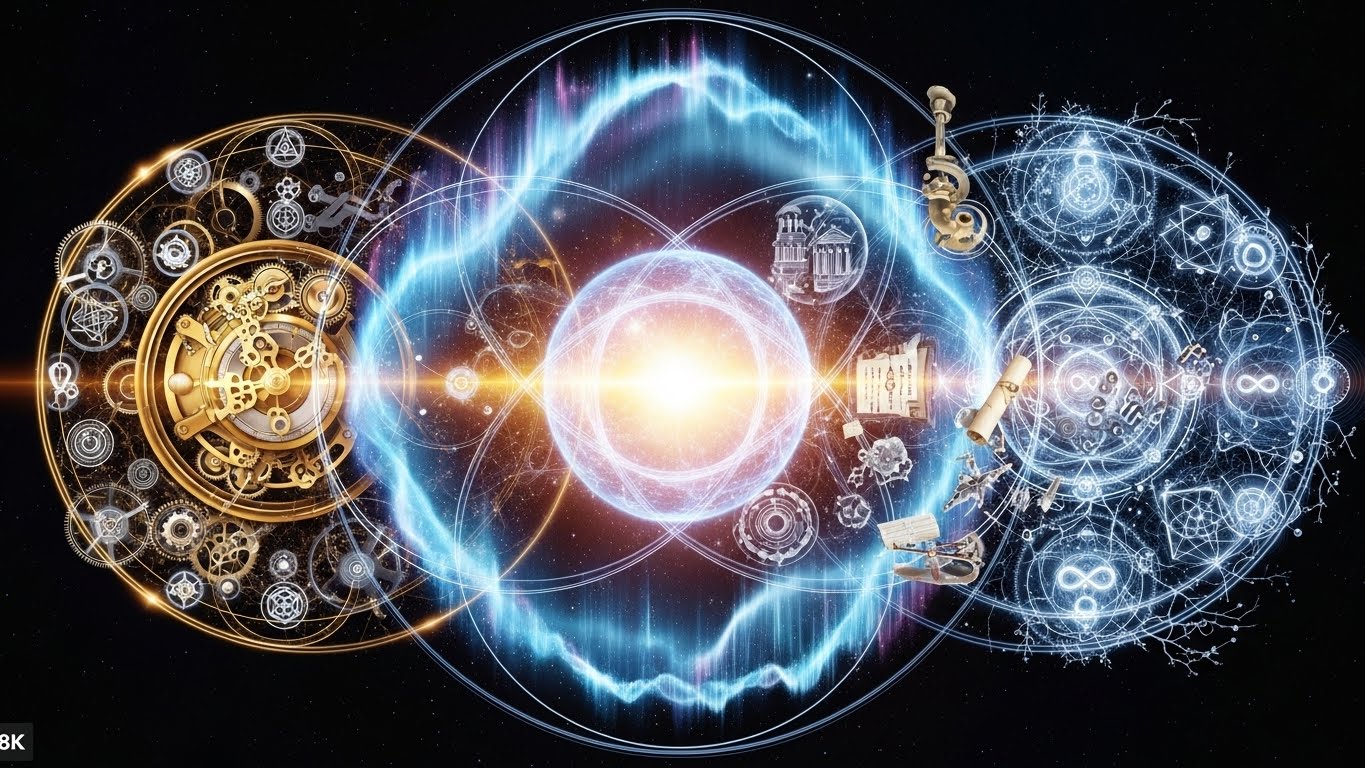
The philosophical underpinnings of pentachronism trace back to ancient contemplations about time’s nature, though the specific five-dimensional framework represents a more modern synthesis. Classical philosophers like Augustine grappled with time’s paradoxes, noting how the past no longer exists, the future hasn’t yet arrived, and the present seems infinitely brief. Pentachronism builds upon these foundational questions by proposing that time operates across five interconnected layers: chronological time (objective succession), psychological time (subjective experience), cultural time (collective narratives), quantum time (probabilistic states), and metaphysical time (eternal or transcendent dimensions). Each layer functions according to its own principles yet remains intrinsically connected to the others, creating a rich tapestry of temporal experience.
Modern proponents of pentachronism argue that this framework resolves numerous philosophical puzzles that have plagued temporal theory for centuries. The five-dimensional approach accommodates both Einstein’s relativistic understanding of spacetime and the subjective, lived experience of duration that Henri Bergson championed. By acknowledging multiple temporal dimensions, pentachronism explains how an event can be simultaneously fixed in chronological history yet remain fluid in psychological memory or cultural interpretation. This philosophical flexibility makes pentachronism particularly appealing to contemporary thinkers who recognize that reductionist models fail to capture time’s full complexity. The framework suggests that attempting to understand time through a single lens inevitably distorts our comprehension of temporal reality.
Read More: Buy Bigussani
The Five Dimensions of Time in Pentachronism
Understanding pentachronism requires examining each of its five proposed temporal dimensions individually before appreciating how they interconnect. The first dimension, chronological time, represents the measurable, sequential progression we track with clocks and calendars—the objective timeline of events occurring in succession. This dimension aligns most closely with our everyday understanding and scientific measurements. The second dimension, psychological time, encompasses subjective temporal experience: how time seems to accelerate when we’re engaged and crawl when we’re bored, how trauma can make moments stretch infinitely, and how nostalgia compresses years into vivid snapshots. This subjective layer explains why ten minutes waiting feels different from ten minutes of joy, despite identical chronological duration.
The remaining three dimensions add further complexity to the pentachronism framework. Cultural time, the third dimension, refers to collective temporal narratives—how societies construct historical meaning, anticipate futures, and create shared temporal frameworks through traditions, commemorations, and generational storytelling. Quantum time, the fourth dimension, addresses probabilistic temporal states where multiple potential timelines exist simultaneously until observation collapses them into actuality, reflecting insights from quantum mechanics. Finally, metaphysical time represents the eternal or transcendent dimension—concepts of timelessness, divine temporality, or the notion of time as illusion found in various spiritual traditions. Together, these five dimensions of pentachronism create a comprehensive model that accounts for time’s objective measurements, subjective experiences, social constructions, physical uncertainties, and spiritual interpretations, offering unprecedented explanatory power for temporal phenomena.
Pentachronism in Quantum Physics and Cosmology
The intersection of pentachronism with quantum physics reveals fascinating parallels between philosophical speculation and empirical observation. Quantum mechanics has long troubled physicists with temporal paradoxes—particles that seem to exist in multiple states simultaneously, effects that appear before their causes in certain experimental configurations, and entangled particles that influence each other instantaneously across vast distances. The pentachronism framework, particularly its quantum time dimension, provides a conceptual structure for understanding these phenomena without abandoning causality entirely. Rather than viewing quantum temporal anomalies as violations of time’s nature, pentachronism suggests they reveal a deeper layer of temporal reality that operates according to different principles than chronological succession.
Cosmologists have similarly found pentachronism useful when grappling with questions about the universe’s temporal boundaries. The Big Bang poses the perplexing question of what came “before” time itself began, while theories about the universe’s ultimate fate—heat death, big crunch, or eternal expansion—raise questions about time’s end. By incorporating metaphysical and quantum temporal dimensions, pentachronism offers frameworks for conceptualizing time’s origin and terminus without requiring that time conform exclusively to linear causality. Some theoretical physicists have even proposed mathematical models inspired by pentachronism that treat time as a multi-layered field rather than a single arrow, potentially explaining dark energy, cosmic inflation, and other phenomena that remain mysterious under conventional temporal models. These applications demonstrate how pentachronism bridges abstract philosophy and cutting-edge science.
Cultural Manifestations of Pentachronism Across Civilizations
Throughout human history, various cultures have intuitively grasped aspects of pentachronism, even without explicitly articulating the five-dimensional framework. Indigenous societies often maintain complex temporal cosmologies where ancestral time, mythological time, and everyday time coexist and interpenetrate. The Aboriginal Australian concept of “Dreamtime,” for instance, describes a temporal dimension that is simultaneously past, present, and eternal—a clear parallel to pentachronism’s metaphysical dimension. Similarly, Hindu and Buddhist philosophies conceptualize cyclical time (kāla) alongside transcendent timelessness (mahākāla), acknowledging multiple temporal realities operating simultaneously. These cultural precedents suggest that pentachronism articulates something fundamental about human temporal experience across diverse contexts.
Western culture, despite its modern emphasis on linear, chronological time, also contains pentachronistic elements woven throughout its artistic and religious traditions. Marcel Proust’s exploration of involuntary memory in “In Search of Lost Time” brilliantly illustrates psychological time’s capacity to collapse decades into moments through sensory triggers. Christian theology’s distinction between chronos (sequential time) and kairos (opportune, qualitative time) recognizes multiple temporal dimensions operating within human experience. Even popular culture reflects pentachronistic thinking—science fiction narratives exploring parallel timelines, time loops, and temporal paradoxes implicitly acknowledge that time operates along multiple dimensions simultaneously. These cultural manifestations demonstrate that pentachronism doesn’t merely represent academic speculation but instead articulates insights about temporal reality that humans across cultures have long recognized through mythology, religion, art, and storytelling.
Psychological Implications: How We Experience Pentachronism Daily
The psychological dimension of pentachronism manifests constantly in our everyday lives, often without conscious recognition. Memory research has revealed that our recollections don’t function like video recordings playing back chronological sequences; instead, memories reconstruct past experiences through present psychological states, desires, and contexts. This reconstructive process exemplifies how psychological time diverges from chronological time—two people experiencing the same event create different temporal narratives based on attention, emotion, and subsequent experiences. Trauma particularly illustrates pentachronism’s psychological dimension, as traumatic memories often feel simultaneously distant and immediately present, collapsing the chronological distance while intensifying the psychological immediacy. Therapeutic approaches like EMDR acknowledge this temporal complexity by working to reintegrate traumatic memories into coherent narratives.
Beyond memory, pentachronism illuminates other psychological temporal phenomena that conventional models struggle to explain. Flow states, where individuals become so absorbed in activities that hours pass like minutes, demonstrate psychological time’s elasticity independent of chronological duration. Anticipation and dread similarly warp subjective temporal experience—a child waiting for Christmas or an anxious person awaiting medical results experiences time’s passage completely differently from what clocks measure. Depression and anxiety can both be understood through pentachronism’s framework as disorders where psychological time becomes trapped or accelerated, no longer properly synchronized with other temporal dimensions. Mindfulness practices essentially train individuals to better align their psychological time with chronological present moments, reducing the suffering caused when consciousness dwells excessively in memory or anticipation. These applications make pentachronism not just theoretically interesting but practically valuable for understanding human wellbeing.
Pentachronism in Digital Technology and Artificial Intelligence
The digital age has introduced novel temporal complexities that pentachronism helps illuminate. Computer systems operate on precise chronological time measured in nanoseconds, yet they simultaneously create psychological temporal distortions—social media scrolling makes hours vanish, while buffering makes seconds feel eternal. Digital photography and video enable unprecedented manipulation of cultural time, allowing societies to construct and reconstruct collective memories with edited, filtered, and selectively preserved moments. Cloud computing distributes data across multiple servers and time zones, creating a kind of quantum temporal state where information exists simultaneously in multiple temporal and spatial contexts. These technological developments practically instantiate pentachronism’s theoretical framework, demonstrating how multiple temporal dimensions operate simultaneously in digital environments.
Artificial intelligence raises even more profound questions that pentachronism addresses. Machine learning systems process historical data (chronological time) to generate predictions (anticipated futures) while operating on computational time scales vastly different from human psychological time. When AI systems make decisions in microseconds that affect human lives unfolding over decades, we encounter practical challenges of synchronizing different temporal dimensions—a core concern of pentachronism. Furthermore, as AI capabilities advance toward artificial general intelligence, questions arise about whether such systems could develop subjective temporal experience analogous to psychological time, or whether they might operate entirely within chronological and computational dimensions. Some theorists suggest that true AI consciousness might require integrating multiple temporal dimensions similar to pentachronism’s framework. These considerations make pentachronism increasingly relevant for navigating our technologically-mediated future.
The Future of Pentachronism: Applications and Emerging Research
As interdisciplinary research continues, pentachronism is finding applications in unexpected fields. Historians and anthropologists employ pentachronistic frameworks to understand how different societies construct temporal narratives and how cultural time shapes collective identity. Literary critics analyze narratives through pentachronism’s lens, examining how authors manipulate multiple temporal dimensions simultaneously—chronological plot progression, psychological temporal experience of characters, and metaphysical time through symbolic structures. Urban planners consider how cities embody multiple temporal layers: chronological aging of infrastructure, psychological rhythms of daily life, cultural historical narratives embedded in architecture, and anticipatory visions shaping development plans. These diverse applications demonstrate pentachronism’s versatility beyond its philosophical origins.
Emerging research at the intersection of neuroscience, physics, and philosophy suggests that pentachronism might describe something fundamental about reality’s structure rather than merely offering a useful conceptual framework. Neuroscientists investigating temporal processing in the brain have discovered that different neural systems track different temporal scales—some measuring milliseconds for motor coordination, others tracking circadian rhythms, still others constructing autobiographical timelines spanning decades. This neural architecture parallels pentachronism’s multi-dimensional structure. Meanwhile, some theoretical physicists exploring quantum gravity and unified field theories propose that time itself might be emergent from more fundamental non-temporal dimensions, potentially vindicating pentachronism’s claim that multiple temporal dimensions arise from deeper reality structures. As research progresses, pentachronism may transition from philosophical speculation to empirically-grounded scientific theory, fundamentally reshaping how we understand temporal reality.
Conclusion
Pentachronism offers a rich, multi-layered framework for understanding time that transcends simplistic linear models. By recognizing five distinct yet interconnected temporal dimensions—chronological, psychological, cultural, quantum, and metaphysical—this philosophical approach accommodates the full complexity of human temporal experience. From quantum physics paradoxes to psychological trauma, from cultural memory to artificial intelligence, pentachronism provides conceptual tools for navigating temporal phenomena that conventional models fail to adequately explain. As our world grows increasingly complex through technological advancement and scientific discovery, frameworks like pentachronism become not merely academically interesting but practically essential.
The implications of adopting a pentachronistic worldview extend far beyond abstract philosophy into how we structure societies, design technologies, approach mental health, and understand our place in the cosmos. By acknowledging that time operates along multiple dimensions simultaneously, we can develop more sophisticated approaches to problems ranging from historical reconciliation to future planning. Whether pentachronism ultimately represents accurate description of reality’s temporal structure or serves as a productive metaphorical framework, its capacity to illuminate previously obscure aspects of existence ensures its continued relevance. As we move forward into an uncertain future, embracing the multidimensional temporal perspective that pentachronism advocates may prove crucial for navigating the complexities ahead.
